
Attorneys and investigators frequently encounter video evidence that is frustratingly unclear. Critical events may be recorded, yet the footage appears too dark, too grainy, too shaky, or too distant to interpret confidently. A common question quickly follows:
Can this video be enhanced? In many cases, the answer is yes—but with important limitations.
Forensic video enhancement is not the dramatic transformation often portrayed in television crime shows. It is not a process that “creates” detail or magically converts low-quality video into high-definition imagery. Instead, it is a careful, methodical, and scientifically grounded discipline focused on improving the visibility of information that already exists within the original recording.
When performed correctly, forensic video enhancement can clarify actions, improve interpretability, and assist judges and juries in understanding events. When misunderstood or misapplied, however, it can create unrealistic expectations or even admissibility challenges.
This article explains how forensic video enhancement actually works, what techniques are used, what results are realistic, what cannot be recovered, and how courts evaluate enhanced video evidence in U.S. legal proceedings.
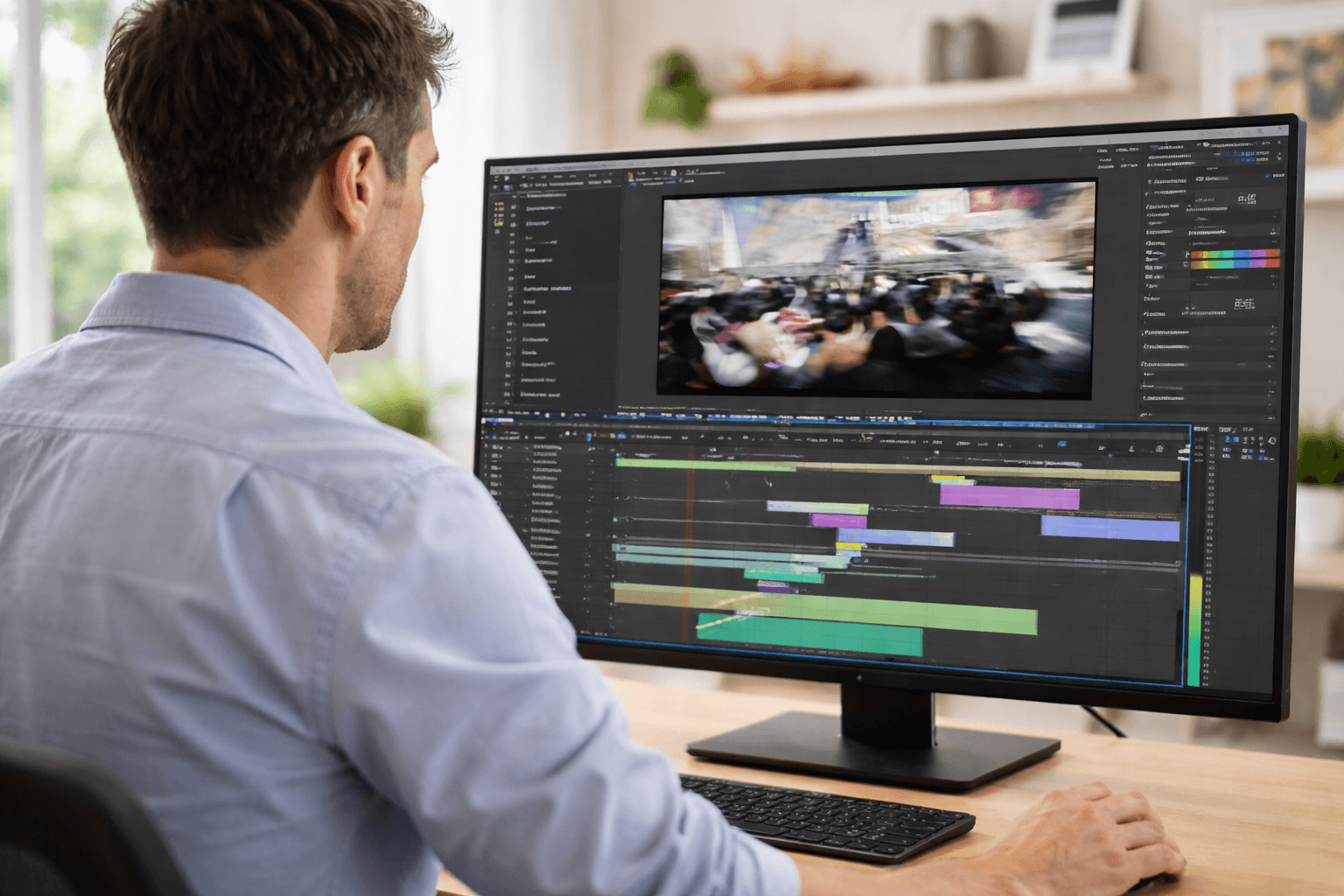
What Is Forensic Video Enhancement?
Forensic video enhancement is the controlled processing of video evidence to improve the perceptibility of recorded information while preserving evidentiary integrity.
The emphasis is on accuracy, transparency, repeatability, and documentation. Enhancement is not cosmetic editing. It is not intended to make footage “look better” for presentation. The goal is to help viewers more clearly see what the camera has already captured. Every step must be explainable and defensible in court.
How Forensic Enhancement Differs from Consumer Video Editing
A critical distinction exists between forensic work and ordinary editing software.
Consumer or commercial editing tools often prioritize appearance. They freely add effects, sharpen aggressively, or apply filters that alter the look of the image. These changes may be visually appealing but are not necessarily reliable or reproducible.
Forensic enhancement, by contrast, preserves the original evidence, uses working copies only, applies conservative adjustments, documents each step, avoids introducing synthetic detail, and can be replicated by another qualified analyst. Courts generally accept documented forensic methods and view undocumented or aesthetic editing with skepticism.
The Forensic Video Enhancement Workflow
Professional enhancement follows a structured workflow designed to protect evidentiary value.
Step 1: Evidence Preservation
The original video files are secured immediately. Analysts preserve originals without modification, create forensic working copies, maintain the chain of custody, and document file hashes when appropriate. No processing is ever performed on the original evidence.
Step 2: Technical Evaluation
Before any enhancement begins, the recording is examined to understand its technical properties. This includes codec and compression format, frame rate, resolution, bitrate, interlaced or progressive scanning, and proprietary DVR exports. These characteristics determine what is realistically recoverable and prevent improper processing.
Step 3: Controlled Enhancement Techniques
Enhancement is applied gradually and conservatively.
Common techniques include:
• Brightness and Contrast Adjustment: Improves visibility in low-light scenes and increases separation between subjects and backgrounds.
• Noise Reduction: Reduces graininess caused by low light or compression while preserving meaningful detail.
• Stabilization: Removes camera shake to make motion easier to interpret, particularly in handheld or body-worn footage.
• Temporal Filtering: Uses information across multiple frames to reduce noise and clarify consistent details.
• Selective Sharpening: Applied cautiously to improve edge perception without creating artificial features.
Each step is evaluated to ensure that nothing misleading is introduced.
Step 4: Documentation
Every adjustment is documented, including the software used, settings applied, order of operations, and result comparisons. Documentation allows another expert to reproduce the results, which is critical for admissibility.
Step 5: Validation
Analysts confirm that no new information was created, no meaningful information was removed, and results accurately reflect the original content. Limitations are noted clearly.
What Forensic Video Enhancement Can Improve
Enhancement can often improve:
• Low-Light Visibility: When objects exist but are difficult to see, brightness and contrast adjustments may clarify them.
• Noise Reduction: Reducing graininess can make shapes and movement easier to interpret.
• Motion Interpretation: Stabilization may make actions and sequences more understandable.
• Perception of Existing Details: Clothing, outlines, and object interactions may become easier to observe. Forensic video analysis can uncover invisible clues that exist within the footage but are obscured by technical limitations.
What Forensic Video Enhancement Cannot Do
Equally important are the limitations.
Enhancement cannot:
• Create Missing Detail: If the camera never recorded the information, it cannot be recovered.
• Overcome Resolution Limits: A low-resolution image cannot become high-definition.
• Fix Extreme Blur: Severe motion blur destroys information permanently.
• Change Perspective: Enhancement cannot reveal areas outside the camera’s field of view.
• Guarantee Identification: Facial or license plate identification depends on what the camera actually captured.
These limits are grounded in physics and digital imaging science.
Common Misconceptions
1. Can You Zoom in and Read the Plate? Digital zoom enlarges pixels. It does not add detail.
2. Can AI Make It Clearer? AI tools often generate synthetic or fabricated details. Courts may challenge these results.
3. Can You Enhance This to HD? Resolution cannot exceed what was originally recorded.
Understanding these realities helps set appropriate expectations.
How Courts Evaluate Enhanced Video
Courts typically assess whether the original evidence was preserved, whether the enhancement is reproducible, whether the process is transparent, and whether the results are potentially misleading. Enhanced video is often shown alongside the original to maintain transparency.
Experts must explain what was done, why it was done, and what remains uncertain. Methodology matters more than appearance. Understanding the role of video forensics in court helps legal professionals present evidence more effectively.
When Attorneys Should Consult a Forensic Video Expert
Consult early when:
• Video is critical to the case
• The footage is unclear
• Opposing parties may challenge authenticity
• Demonstrative exhibits will be used
• Early involvement prevents accidental evidence loss and improves admissibility outcomes.
Conclusion
Forensic video enhancement is a disciplined and scientifically grounded process. It clarifies existing information but does not create new details. When performed properly and documented carefully, it can significantly assist courts and investigators in understanding complex visual evidence.
Understanding both its capabilities and limitations allows legal professionals to use enhancement responsibly and effectively.
Stutchman Forensic Lab provides forensic video enhancement and expert testimony services nationwide for attorneys, investigators, and insurance defense teams. We serve clients across the United States, including Los Angeles, Seattle, Dallas, Phoenix, Chicago, New York, Atlanta, among others. For consultation, call 707-257-0828.
Frequently Asked Questions About Forensic Video Enhancement
What does forensic video enhancement actually do?
Forensic enhancement improves the visibility and interpretability of recorded information using controlled adjustments such as brightness correction, contrast balancing, noise reduction, and stabilization.
Can you make a blurry or dark video clear?
Sometimes visibility can be improved if information exists in the recording. However, extreme blur, low resolution, or missing data cannot be reliably recovered.
Can you zoom in to read a license plate or identify a face?
Digital zoom enlarges pixels but does not add detail. If the information was not captured by the camera, it cannot be reconstructed forensically.
Are AI video enhancement apps acceptable for court?
Consumer AI tools often introduce synthetic or fabricated details and lack transparency. Courts typically prefer explainable, repeatable forensic methods rather than automated “black box” processing.
Is enhanced video admissible in court?
Yes, when the enhancement process is documented, conservative, reproducible, and the original evidence is preserved. Proper expert testimony supports admissibility.
When should a forensic video expert be contacted?
As early as possible. Early consultation helps preserve original files, maintain metadata, and prevent evidence loss that can occur through re-encoding or copying.
Who provides court-defensible video enhancement services?
Stutchman Forensic Lab provides forensic video enhancement and expert testimony services nationwide for attorneys, investigators, and insurance defense teams.